
Selling your property to avoid foreclosure is the single most effective way to preserve your equity and protect your credit before a lender takes control. Federal law gives delinquent homeowners a 120-day window before formal foreclosure can begin. That window is your most valuable asset. Many homeowners mistakenly believe they have no equity left by the time they fall behind, but most retain significant value that a timely sale can protect. The industry term for this process is a "pre-foreclosure sale," and understanding how it works can mean the difference between walking away with cash and walking away with nothing.
What should homeowners know before selling to avoid foreclosure?
The legal clock starts the moment you miss a payment. Federal law prohibits mortgage servicers from initiating formal foreclosure until you are 120 days past due. That rule exists to give you time to explore options, including selling. Acting before that window closes maximizes both your selling choices and your financial outcome.
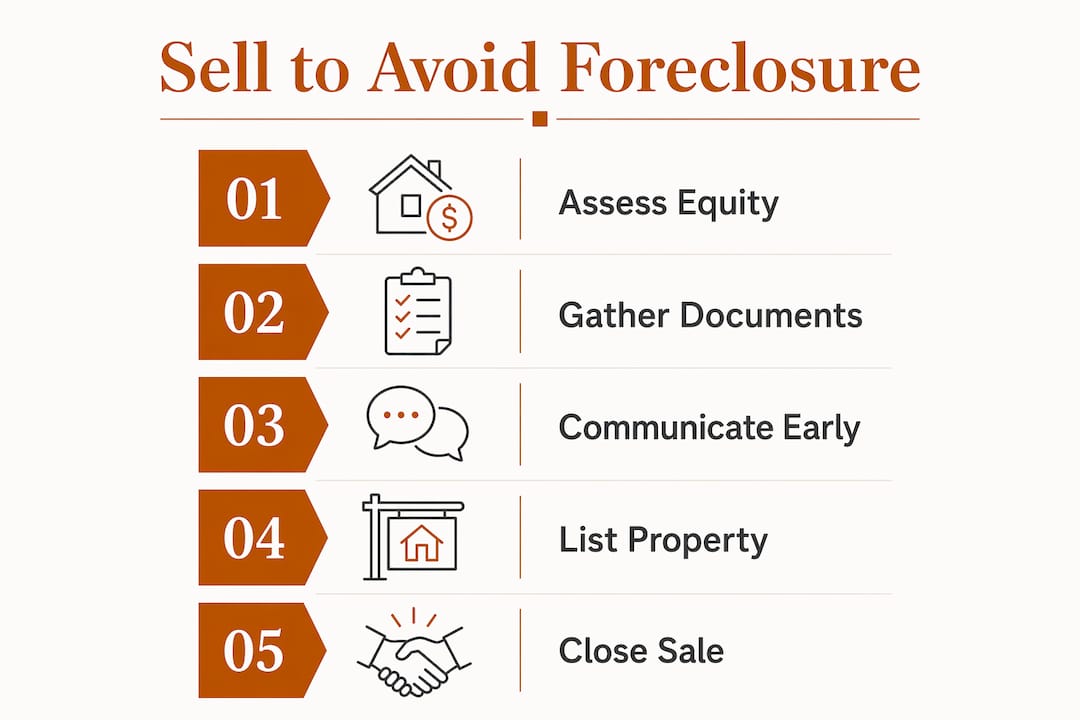
Before you list your home, gather your full hardship package. A complete package includes pay stubs, two years of tax returns, recent bank statements, and a written hardship letter explaining your situation. Preparing this documentation before calling your lender speeds up the evaluation process and increases your chances of getting a loan workout or short sale approval. Lenders respond faster when you arrive organized.

Communicate with your lender directly and early. Listing your home alone does not pause the foreclosure process. Lenders require active communication to delay a scheduled auction, and silence is the fastest way to lose your options. Call your servicer, explain your intent to sell, and request a postponement in writing.
You also need to understand your equity position before pricing your home. Pull your mortgage statement, check your outstanding balance, and get a rough market value estimate from a local agent. Understanding what equity you hold tells you whether a traditional sale, a short sale, or another path makes the most sense for your situation.
Pro Tip: Request a payoff statement from your lender, not just your current balance. The payoff figure includes accrued interest and fees, which affects your net proceeds from any sale.
The three main options in a pre-foreclosure situation are a traditional sale, a short sale, and a deed-in-lieu of foreclosure. A traditional sale works when your home's value exceeds what you owe. A short sale applies when you owe more than the home is worth and the lender agrees to accept less. A deed-in-lieu transfers ownership directly to the lender without a public auction. Each path has different credit and tax consequences, so consult a HUD-approved housing counselor before deciding.
How can you sell your home fast to prevent foreclosure?
Speed is the defining factor in a pre-foreclosure sale. The faster you close, the more equity you protect and the less damage your credit absorbs. Acting by 60 days delinquent maximizes equity retention before late fees and legal costs accumulate.
The four most practical strategies for a fast home sale are:
- List with a pre-foreclosure specialist. Real estate agents who specialize in distressed sales know how to price aggressively, disclose properly, and negotiate with lenders. They move faster than generalist agents because they understand the legal timeline.
- Accept a cash offer from an investor. Cash buyers and real estate investors typically make firm offers within 24–48 hours and can close in 7–14 days. That speed comes at a cost: net returns run 5–15% lower than a fully repaired traditional sale. For homeowners under time pressure, that trade-off is often worth it.
- Sell as-is without repairs. Skipping repairs saves weeks. Price the home to reflect its condition and let buyers factor in their own renovation costs. Transparency here builds buyer confidence and reduces the chance of deals falling apart after inspection.
- Offer buyer incentives. Closing cost credits, mortgage assumption options, or flexible closing dates can attract buyers faster than a price cut alone. Buyers who see a motivated but transparent seller move quicker.
Pro Tip: Get a title search done before you list. Discovering a lien or unpaid tax bill after you have a buyer under contract can kill the deal and cost you weeks you do not have.
Pricing is the lever that controls speed. Homes priced at or slightly below market value sell faster and attract more offers. Overpricing in a pre-foreclosure situation is the most common mistake sellers make. You can read more about fast closing strategies that experienced investors use to move properties quickly under time pressure.
What challenges do homeowners face when selling under financial stress?
Title problems are the most common deal killer in pre-foreclosure sales. Liens, unpaid property taxes, and court judgments attach to the property and must be resolved before any buyer can receive a clean title. Title issues like these can delay closing even when a cash buyer is ready to fund immediately. Order a title search early and address any encumbrances before you list.
Buyer skepticism is a real obstacle. Some buyers hesitate when they learn a home is in pre-foreclosure, fearing the deal will collapse if the lender does not cooperate. Counter this by being transparent upfront, having your lender's written acknowledgment of the sale, and working with an agent who can explain the process clearly to buyers and their agents.
"Homeowners frequently overestimate how much time they have and underestimate what lenders actually require, causing deals to fall apart under foreclosure pressure." — Gannlending blog, 2026
Foreclosure rescue scams are a serious threat. Scammers charge upfront fees and promise to stop foreclosure or find buyers, then disappear with your money. Legitimate HUD-approved counseling is free. Your mortgage servicer's loss mitigation department is also free to contact. Never pay anyone upfront to "save" your home.
Deals fall through for predictable reasons: financing contingencies, inspection surprises, and title delays. Mitigate these risks by targeting cash buyers, completing your own pre-listing inspection, and resolving title issues before going to market. You can study the most common reasons deals collapse to build a sale process that avoids them.
What options exist when selling alone isn't enough?
Sometimes a sale alone cannot solve the problem fast enough. Combining a sale with loss mitigation tools gives you more flexibility and a better financial outcome.
The main alternatives and complements to a pre-foreclosure sale include:
- Forbearance. Your servicer temporarily reduces or pauses your payments. This buys time to complete a sale without the foreclosure clock advancing. Request it in writing and get the terms documented.
- Loan modification. The lender permanently changes your loan terms, such as the interest rate or repayment period, to make payments affordable. This works best when you plan to keep the home, not sell it.
- Repayment plan. You catch up on missed payments over time by adding a portion to your regular monthly payment. This is the simplest option if your hardship was temporary.
- Short sale. The lender agrees to accept less than the full payoff amount. This requires lender approval and takes longer than a direct sale, but it avoids a foreclosure record on your credit report.
- HUD-approved housing counselor. These counselors review your full financial picture and recommend the right combination of options. The service is free and available nationwide through the HUD website.
| Option | Best for | Timeline |
|---|---|---|
| Traditional pre-foreclosure sale | Homeowners with positive equity | 30–90 days |
| Cash investor sale | Homeowners needing speed over price | 7–14 days |
| Short sale | Homeowners who owe more than value | 60–120 days |
| Forbearance plus sale | Homeowners needing time to list | Varies by servicer |
| Loan modification | Homeowners who want to stay | 30–90 days |
Bridge loans and private lending options also play a role when you need to cover a mortgage gap while your sale closes. Gannlending funds real estate transactions in as few as 5–7 business days, which can cover a critical payment gap and prevent a foreclosure auction from proceeding while your sale finalizes.
Key Takeaways
Selling your property before foreclosure is the most reliable way to preserve equity, protect your credit, and exit a distressed situation on your own terms.
| Point | Details |
|---|---|
| Act within the 120-day window | Federal law gives you time before foreclosure starts; use it to list and negotiate. |
| Prepare your hardship package first | Pay stubs, tax returns, bank statements, and a hardship letter speed lender cooperation. |
| Cash buyers close fastest | Investor offers close in 7–14 days, though net returns run 5–15% lower than traditional sales. |
| Resolve title issues early | Liens and unpaid taxes kill deals; order a title search before listing, not after. |
| Combine strategies when needed | Forbearance, short sales, and HUD counseling work alongside a sale to protect your finances. |
What I've learned from watching homeowners wait too long
The homeowners who come out ahead in a pre-foreclosure situation share one trait: they act before they feel ready. The ones who wait until they feel certain they have no other choice almost always have fewer options and worse outcomes by the time they move.
The most damaging misconception I see is the belief that falling behind on payments means you have no equity left to protect. That is almost never true. Most homeowners who are 60 to 90 days delinquent still hold meaningful equity. A sale at that stage, even at a modest discount, puts real money in your pocket. Waiting another 60 days for a "better" price often costs more in fees, penalties, and credit damage than the price difference would have gained.
Lender communication is the other area where homeowners consistently underperform. Calling your servicer feels uncomfortable, especially when you are behind. But servicers have loss mitigation departments specifically designed to work with you. Silence is what triggers the automated foreclosure process. A single phone call, backed by a prepared hardship package, can buy you weeks.
My honest advice: get a title search done immediately, call your servicer today, and price your home to sell rather than to hope. The goal is not to get the highest possible price. The goal is to walk away with something rather than nothing.
— Brian
How Gannlending helps homeowners close fast
When time is the constraint, financing speed determines the outcome.

Gannlending provides hard money loans that close in as few as 5–7 business days, with no appraisal required and financing up to 75% LTV on residential and commercial properties. For homeowners navigating a pre-foreclosure sale, that speed can cover a critical mortgage gap while a buyer closes, preventing an auction from proceeding. Gannlending has funded over $50 million in real estate transactions and focuses on the asset rather than paperwork. If you need fast capital to protect your property while your sale finalizes, Gannlending is built for exactly that situation.
FAQ
Can I sell my home after foreclosure proceedings have started?
Yes. You can sell your home at any point before the foreclosure auction is completed. Federal law requires a 120-day delinquency period before formal proceedings begin, giving you time to list and close.
Does selling before foreclosure hurt my credit?
A pre-foreclosure sale causes far less credit damage than a completed foreclosure. Credit recovery after a pre-foreclosure sale is faster, especially when you act before 90 days delinquent.
What is a short sale and how does it differ from a regular sale?
A short sale occurs when your lender agrees to accept less than the full mortgage payoff. It requires lender approval and takes longer than a direct sale, but it avoids a foreclosure record on your credit report.
How fast can I realistically close a pre-foreclosure sale?
Cash buyers and real estate investors typically close in 7–14 days. Traditional market listings take 60–90 days. Your timeline depends on buyer type, title status, and lender cooperation.
What should I do first if I am behind on my mortgage?
Call your servicer immediately and prepare a hardship package with pay stubs, tax returns, bank statements, and a hardship letter. Gathering this documentation before your call speeds the lender's evaluation and opens more options.